
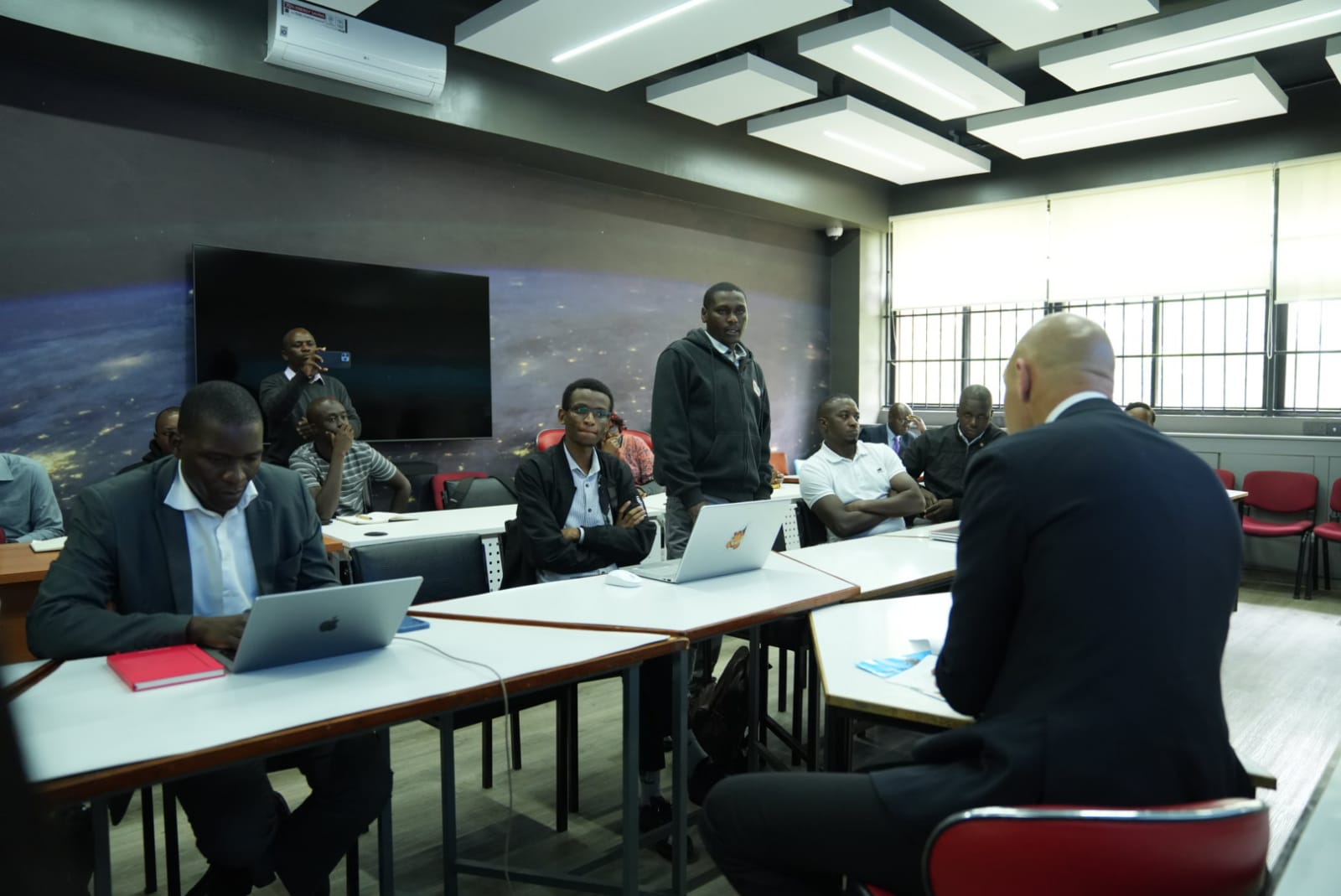
The Faculty of Science and Technology at the University of Nairobi is playing a key role in developing the University's Artificial Intelligence (AI) capacity through postgraduate training, curriculum development and plans to widen access to AI education.
This was the focus of discussions during a visit by UoN Chancellor Prof. Patrick Verkooijen to the Department of Computing and Informatics at Chiromo Campus on Tuesday, 17 November 2026. The visit provided the Faculty with an opportunity to outline progress on the Master of Science in Artificial Intelligence, offered through the Department of Computing and Informatics. The inaugural cohort comprises 12 students, who are expected to graduate in December 2027. The programme combines theoretical instruction, practical training and industry engagement.
Prof. Verkooijen called for a clear and ambitious plan to guide the programme's growth, with measurable targets for student enrolment, stronger industry partnerships and resource mobilisation. He encouraged the University to develop partnerships with industry, international organisations and other institutions, noting that collaboration should extend beyond internships to include research, innovation and support for specialised infrastructure. He also offered to support efforts to mobilise resources for the programme.
Dean of the Faculty of Science and Technology, Prof. Nyongesa, spoke about the interdisciplinary nature of AI and its growing relevance across scientific fields. He outlined the Faculty's focus on developing the AI curriculum, engaging alumni and working with industry. He also spoke about the Faculty's role in the University's wider science and engineering development.
Delivering the Vice-Chancellor's remarks, Deputy Vice-Chancellor for Human Resource and Administration, Prof. Kerubo, identified AI as one of the University's Big Five priority areas. She outlined the proposed AI 101 course, intended to equip approximately 55,000 students with foundational AI knowledge, and the development of a University AI policy. She also noted the need for investment in specialised facilities and computing infrastructure
Representing the Chair of the Department of Computing and Informatics, Prof. Miriti, presented the Department's academic programmes and explained the deliberate approach taken in developing the MSc in AI. He highlighted the potential of AI to address local challenges, particularly in sectors such as agriculture and health.
Prof. Waiganjo discussed the programme's structure, which brings together theory, practical learning and industry engagement. He also outlined opportunities for partnerships to support student placements, access to specialised equipment, including robotics and drones, and research seed funding.
The discussions set out the Faculty's priorities as it develops AI training and research: growing the postgraduate programme, expanding industry collaboration, strengthening practical learning and securing the facilities required for innovation. The Faculty's work will contribute to the University's wider efforts to build AI capacity and apply the technology to challenges facing Kenya and beyond.
- Log in to post comments