
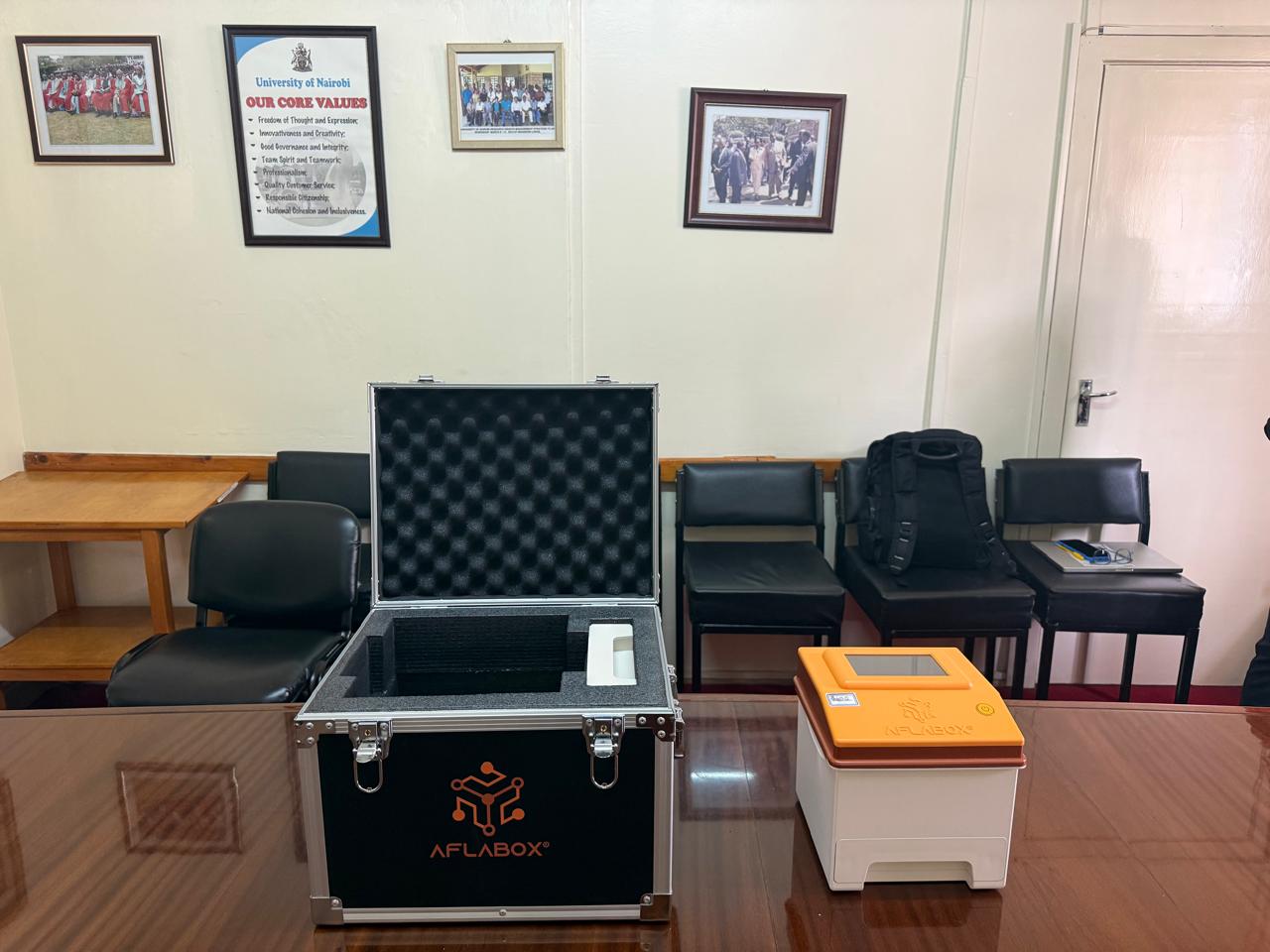
The University of Nairobi is advancing efforts to strengthen food safety through the validation of an artificial intelligence powered technology designed to detect aflatoxin contamination in maize kernels rapidly and without the use of chemical reagents.
The final version of the AI powered aflatoxin testing equipment has arrived at the University for validation as part of a joint partnership between the World Food Programme (WFP) and Aflabox Ltd.
The technology uses imaging and artificial intelligence to analyse maize kernels for aflatoxin contamination in less than two minutes. By eliminating the need for reagents, the system has the potential to simplify the testing process while reducing the time and resources required for routine screening.
Aflatoxins are naturally occurring toxins produced by certain fungi and can contaminate crops such as maize, particularly under conditions that favour fungal growth. Rapid and accessible detection is therefore important in supporting food safety and reducing exposure to contaminated food.
The introduction of AI powered testing could bring aflatoxin screening closer to locations where maize is produced, stored and traded. This could enable farmers, traders, storage facilities and other stakeholders to make faster and more informed food safety decisions.
Through the validation process, the University of Nairobi will contribute to assessing the technology's performance and its potential application in practical food safety settings. The initiative further demonstrates the value of collaboration between academic institutions, international organisations and technology developers in addressing food safety challenges through innovation.
As validation progresses, the technology could contribute to making aflatoxin testing faster, simpler and more accessible, supporting efforts to improve food safety across maize value chains.
- Log in to post comments